 Colour Cozy
What to say about your child's coloring, beyond "good job"
A finished picture is a small invitation to talk. Here are simple phrases that show you really looked, and questions that let your child tell the story.
In this guide
When your child shows you a coloring page, try describing one specific thing you see ("You made the sky purple and the sun pink"), then ask an open question about their choices ("How did you pick those colors?"). Notice the effort or the plan, not just the result. These small, honest comments show you really looked, and they turn a quick "good job" into a short, warm conversation.
"Look what I made!" A child holds up a page, and the words that come out almost by themselves are "Good job!" or "That's beautiful!". There is nothing wrong with saying that. It is kind, and your child knows you mean it.
The trouble is that it ends the conversation. The page goes on the table, and the moment is over. A few different words can turn the same moment into a short chat about colors, choices and stories. This guide covers what to say about your child's coloring, with simple phrases you can use tonight, whether the picture is on paper or on a tablet.
Why "good job" is not the whole answer
Most parenting and art education writers give the same gentle advice: a general verdict says very little about the actual picture. "Good job" sounds the same for a careful page and a rushed one, so it does not tell your child what you noticed.
Specific words do two things that a general verdict cannot:
- They prove you looked. Saying "you used three different blues in the water" shows real attention. Children notice the difference.
- They hand the story back to the child. A question about their choices lets them explain what they were thinking, which is often more fun than being judged.
You do not need to ban "good job" from your house. Just add something after it. Think of it as a starter, not the whole meal.
Three simple ways to respond
Here is an easy routine for any finished picture. It takes less than a minute.
- Stop and look first. Put your phone down, take the page or the tablet, and look for a few seconds before you speak. The pause itself says "this matters to me".
- Describe one thing you see. Name a color, a shape or a detail, without saying if it is good or bad. "The whale has pink cheeks." "You colored all the stars yellow."
- Ask one open question. Pick a question that cannot be answered with yes or no. "Tell me about this part." "Which color did you choose first?"
- Notice the effort or the plan. "You took your time on the tiny flowers." "You kept going even when the edges were tricky."
- Let them lead. If they want to tell a long story, listen. If they just say "I like it" and run off, that is fine too.
That is it. Describe, ask, notice. You can use all three or just one.
Phrases to try, sorted by what you notice
Keep a few of these in your pocket. Change the words to fit the picture.
About colors
- "You picked a purple sky. That makes it look like evening."
- "I see light green next to dark green here."
- "This orange really stands out next to the blue."
About choices and plans
- "How did you decide which color goes where?"
- "You colored it differently from the example. What made you change it?"
- "Which part did you do first?"
About effort
- "You stayed inside the lines on those tiny shapes."
- "That took a long time. You did not give up."
- "You came back to it after dinner and finished it."
Inviting the story
- "Tell me about your picture."
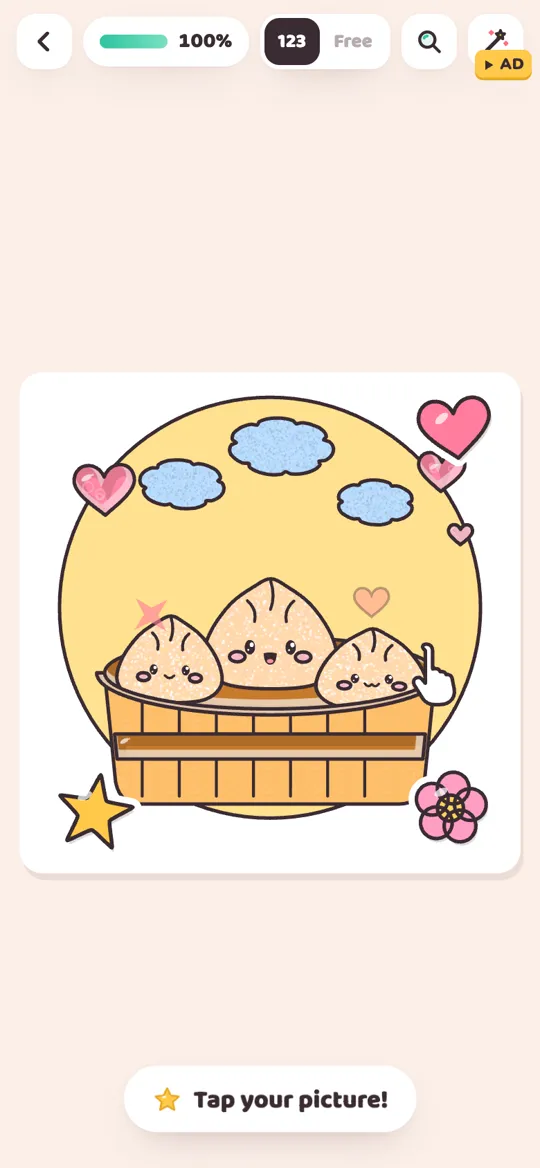
- "What is the dumpling thinking?"
- "If this picture could talk, what would it say?"
About how it felt
- "Which part was the most fun to color?"
- "Was any part tricky?"
Try not to guess what something is. "Is that a horse?" can disappoint a child who drew a dog. "Tell me about this one" is always safe.
What to say at different ages
The same three ideas work at every age, but the words change a little.
Toddlers and preschoolers. Keep it short and concrete. Name colors and point: "Red! Lots of red here." Small children love hearing the names of the colors they used. Simple pages with big shapes give them more to show you.
Early school age. Children this age often have a story in mind. Ask about it: "Who lives in this house?" They also enjoy talking about choices, like why the cat is blue.
Older kids and tweens. They can tell when praise is automatic, so be specific and honest. Talk about technique the way you would with a friend: "The shading on the hair looks soft. How did you do that?" If they ask for advice, give one small idea, not a list.
Teens. Respect privacy. Some teens share everything, others share nothing. A short, real comment ("I like the colors in that one") with no follow-up questions is often just right.
When the picture is on a screen
More and more coloring happens on tablets and phones. The same words work there, and some apps give you extra things to talk about.
In Colour Cozy, a finished picture comes alive and plays a timelapse of everything your child colored. Watching that replay together is a lovely moment for questions: "Oh, you did the clouds first!" or "Why did you go back and change that part?" Our guide to saving and sharing a coloring timelapse shows how to keep one or send it to a grandparent.
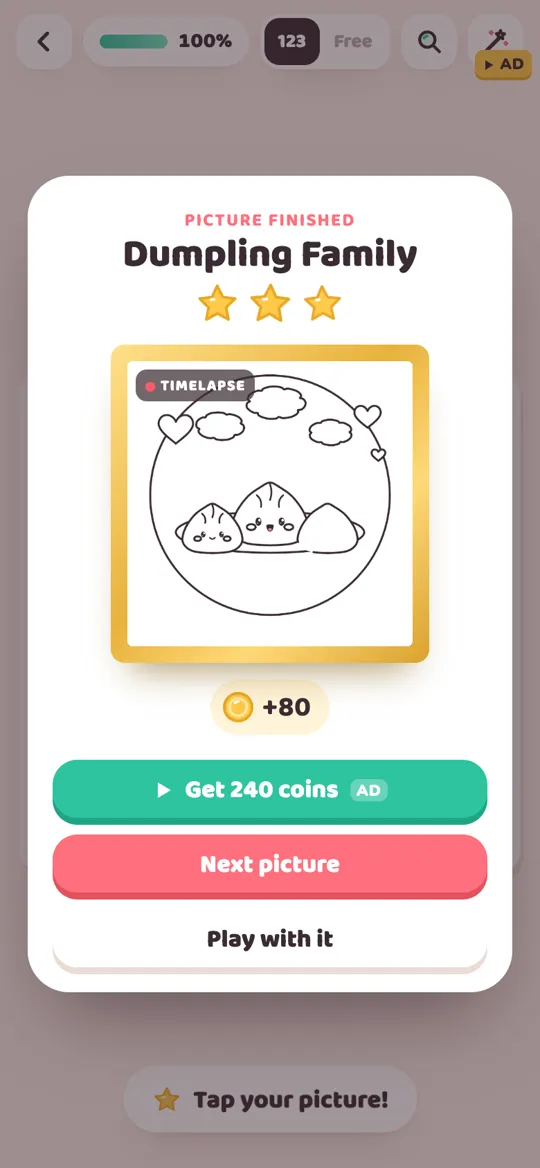
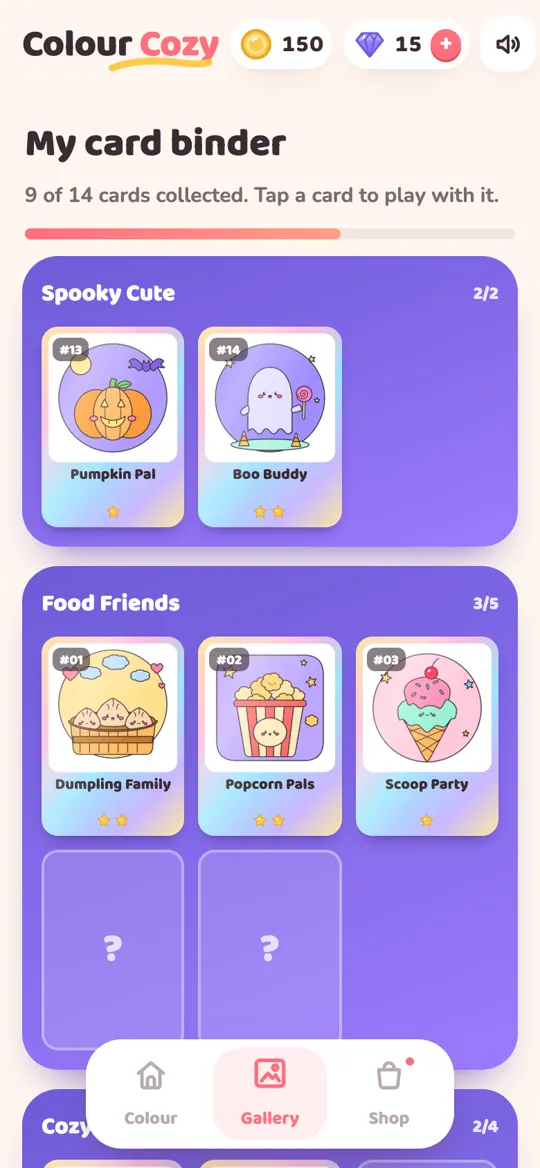
Each finished picture also becomes a foil card in a binder. Flipping through the binder with your child is like looking through a sketchbook. Ask which card is their favorite and why. The card binder guide explains how it works.
There are also no timers in Colour Cozy, so nobody has to rush a picture before you get a chance to see it. If that matters to you, our list of games without timers for kids explains what to look for.
Making it a habit at home
A few small routines keep these conversations going without any extra effort.
- Have a display spot. A fridge door, a corkboard or a folder for paper pages. For screen art, save favorites to the family photo album.
- Let your child choose what goes up. Ask "Which one should go on the fridge this week?" The choosing is a conversation in itself.
- Color next to them sometimes. Then they can ask you about your choices. Our ideas for family coloring activities give you a few games to start with.
- Share with family. Sending a picture to a grandparent, with the child's own description, gives them a reason to explain their work again.
None of this needs to be perfect. If "good job!" slips out, just add one more sentence after it. That small extra sentence is what your child will remember.
FAQ
Is it bad to say "good job" about my child's drawing?
No. It is kind and your child knows you mean it. It just ends the conversation quickly, so try adding one specific comment or an open question after it.
What can I say instead of "that's beautiful"?
Describe something you see, like "You used three blues in the sea", or invite the story with "Tell me about your picture". Both show you looked closely without judging.
What if I can't tell what my child colored?
Do not guess. Say "Tell me about this one" or "Which part do you like best?" Your child will happily explain, and you avoid naming the wrong thing.
Should I correct coloring outside the lines?
Usually there is no need. Coloring is for fun. If an older child asks how to be neater, share one small tip, such as zooming in or slowing down on the edges.
Does the same advice work for coloring apps?
Yes. Describe the colors, ask about choices and notice the effort. In apps with a timelapse replay, watching it together gives you lots of easy questions to ask.